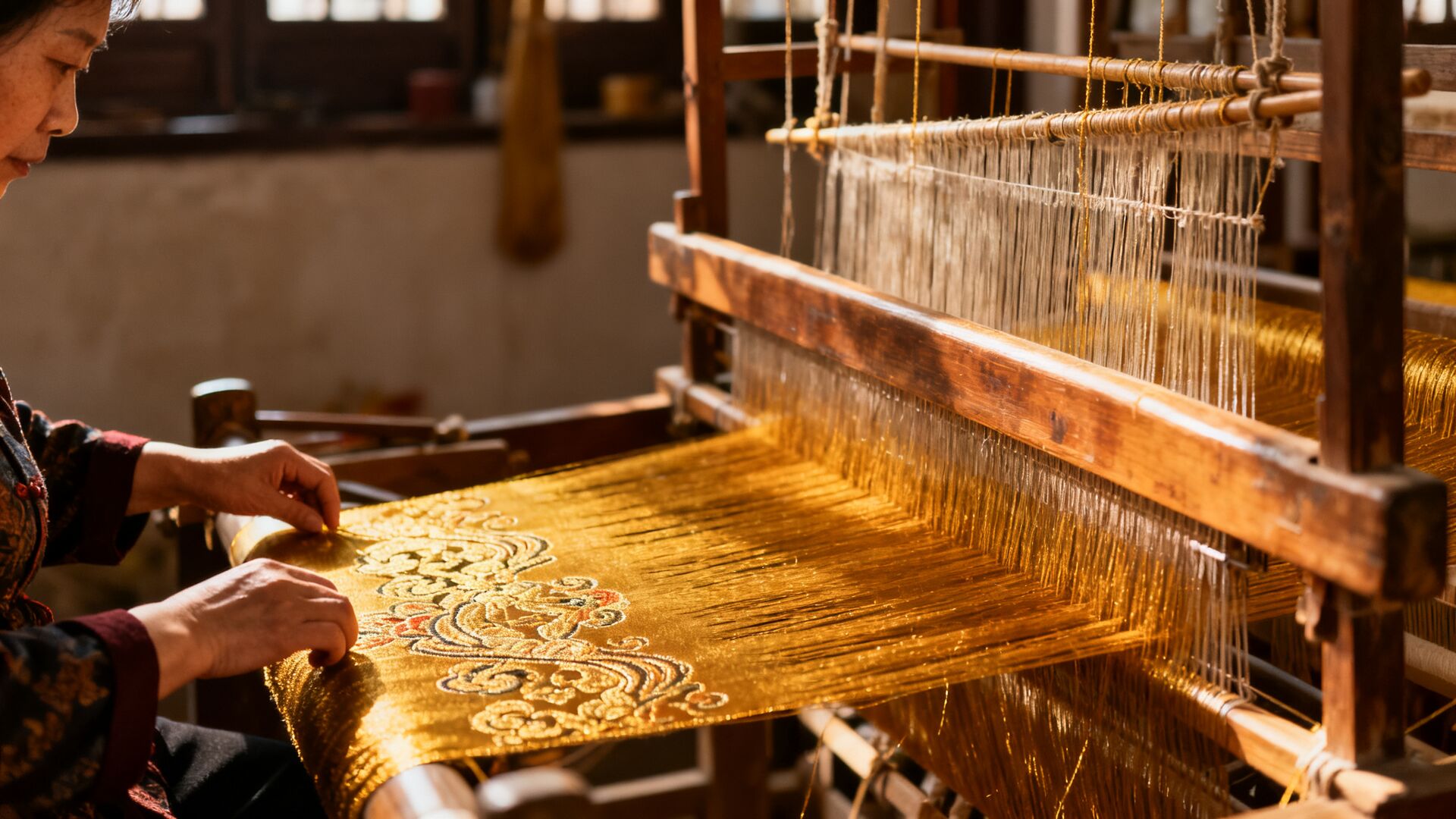
Traditional silk weaving workshop

Heritage

5,000 Years of Sericulture

According to legend, silk was discovered in 2696 BCE by Leizu, wife of the Yellow Emperor, when a cocoon fell from a mulberry tree into her tea. What began as an imperial secret became one of civilization's most transformative materials.

For millennia, China guarded the secrets of silk production — on penalty of death. The fabric traveled the world along the Silk Road, but the knowledge of how to make it stayed within the Middle Kingdom's borders for over 3,000 years.

In 2009, Chinese sericulture and silk craftsmanship were inscribed on the UNESCO Intangible Cultural Heritage of Humanity list — honoring a tradition still alive in the hands of master weavers.

Today, traditional hand-weaving workshops in Suzhou, Hangzhou, and Sichuan continue to produce fabrics that would be recognizable to Tang Dynasty nobles — while modern mills push the material in new directions.
5,000+
Years of Silk History
2009
UNESCO Recognition
7
Classic Weave Categories

Silk Types

Mulberry vs. Tussah

Two distinct species of silkworm produce two distinct kinds of silk — each with its own character, uses, and price point.

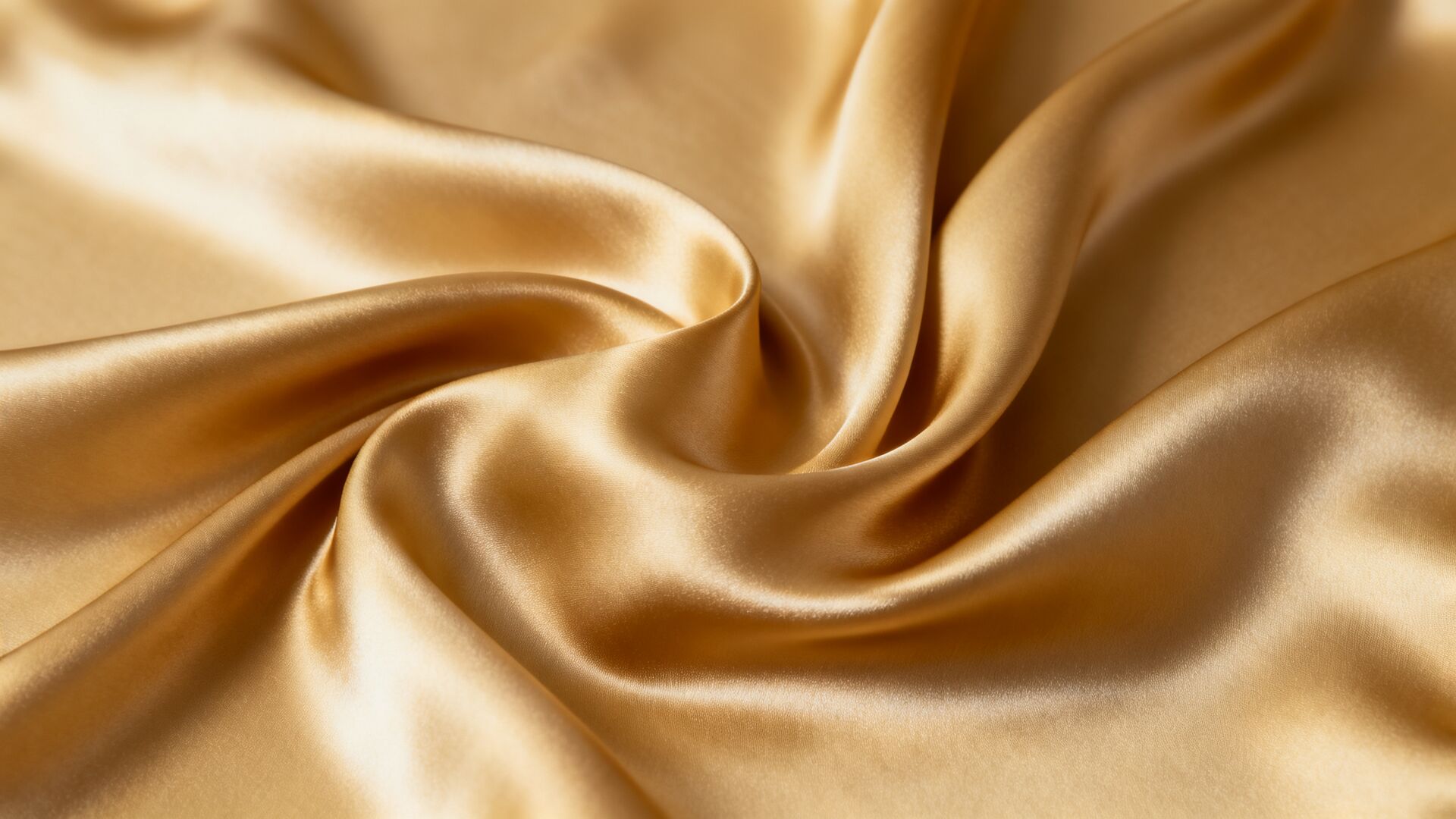
Mulberry silk satin
桑蚕丝 · Premium

Mulberry Silk

Produced by the domesticated Bombyx mori silkworm, fed exclusively on mulberry leaves. The result: smooth, lustrous, long-staple fibers of pure white. The finest silk in the world — used in Hanfu, qipao, bridal wear, and haute couture.

Wild tussah silk brocade
柞蚕丝 · Wild

Tussah / Wild Silk

Produced by wild silkworms that feed on oak leaves in open forests. Coarser texture, shorter fibers, and a natural golden-tan color. More affordable, more durable, and prized for casual wear and textured, artisanal fabrics.

Classic Weave Categories

绫 罗 绸 缎 — The Four Classics

The Chinese language encodes silk with remarkable precision. These four characters describe the foundational weaves — and an entire lexicon of texture, weight, and purpose.

Líng — Twill Weave

A diagonal twill structure with a soft, subtle texture. Historically used for official robes (the term "绫罗绸缎" begins with ling, the fabric of bureaucrats) and for mounting scrolls and paintings.

Luó — Leno Weave

A remarkable open-weave structure where warp threads twist around each other, creating a stable yet highly breathable fabric. The silk of summer — cool, airy, and surprisingly difficult to produce.

Chóu — Plain Weave

Simple over-under weave. Versatile, strong, and matte-finished — the everyday silk of China. "Chou" is so common that it became the general word for silk fabric in modern Chinese.

Duàn — Satin Weave

Floating warp threads create a glossy, lustrous face with a liquid drape. The most luxurious of the four classics — and the fabric most associated with formal qipao, imperial robes, and ceremonial garments.

Beyond the Classics

锦 · 纱 · 绡 · 绢

Four more essential fabrics in the Chinese silk lexicon — each with a distinct purpose and personality.

Jīn — Brocade

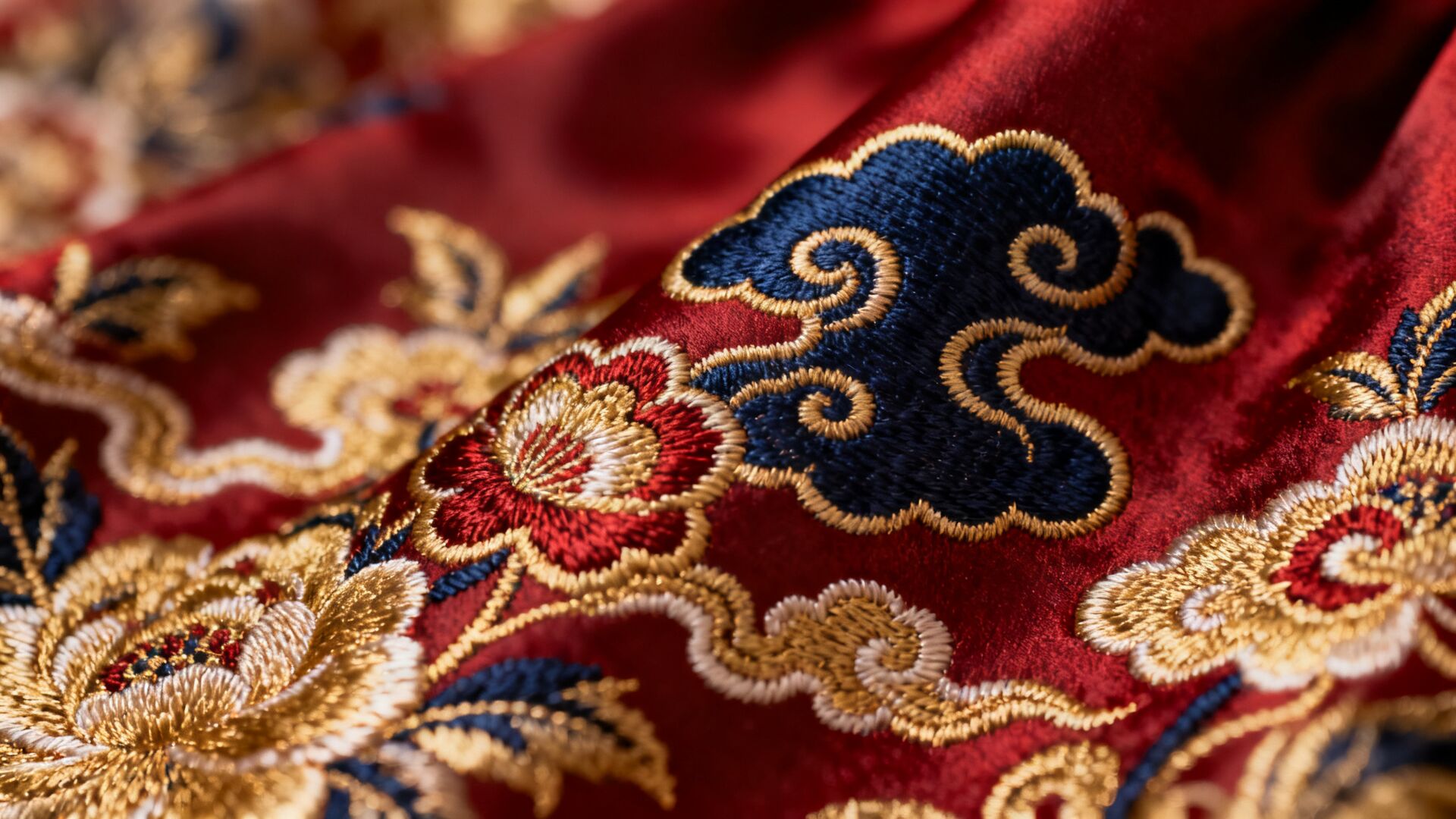
Complex woven patterns in multiple colors using a jacquard or drawloom. Historically reserved for nobility. Yunjin (cloud brocade) of Nanjing and Shujin of Sichuan are the most famous.

Shā — Gauze

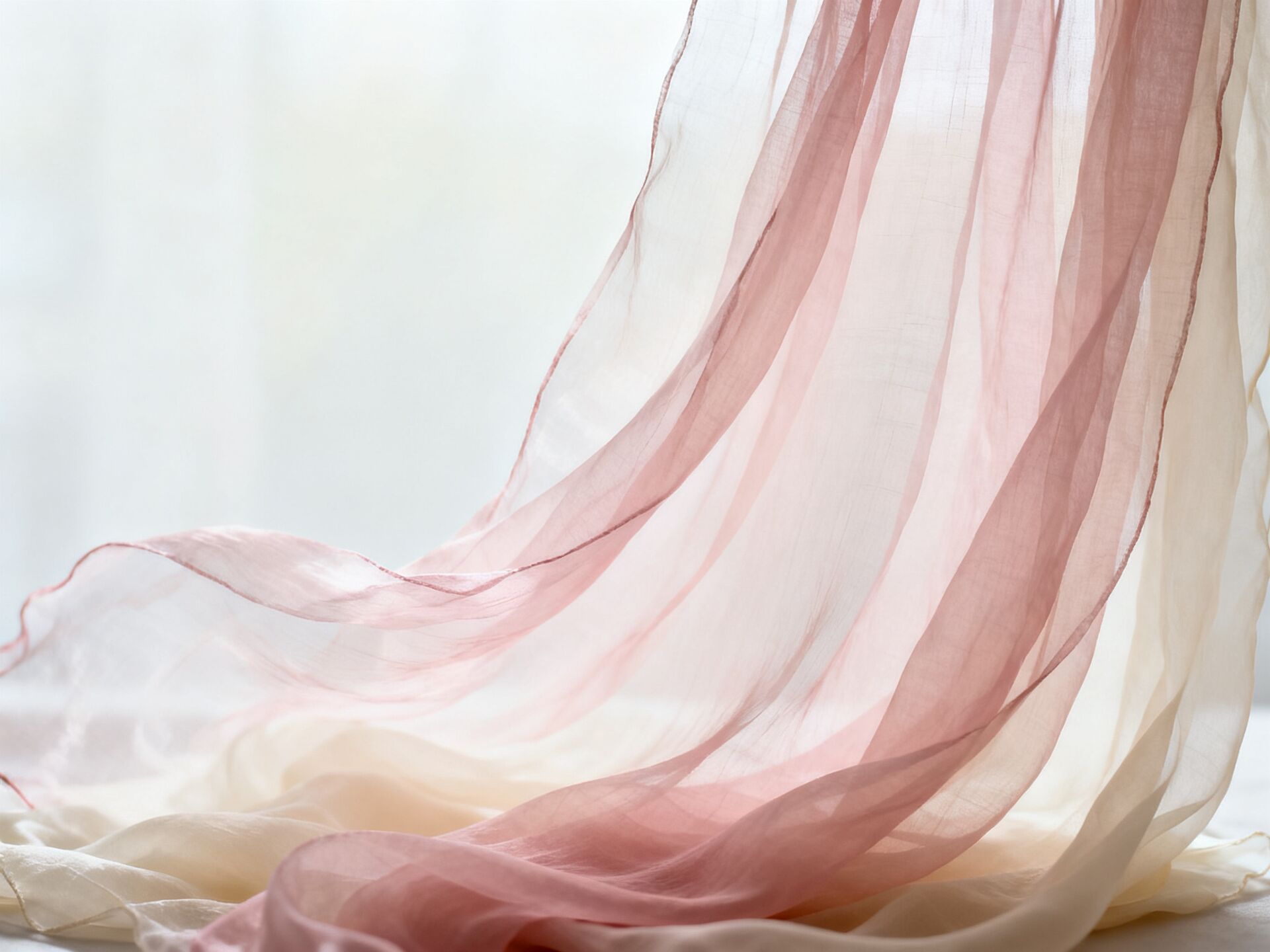
Sheer, open-weave fabric — translucent and lightweight. Used for summer garments, veils, and layering pieces. Offers barely-there coverage with a delicate, ethereal quality.

Xiāo — Sheer Silk

An ultra-lightweight, sheer plain-weave silk. Denser than sha but still translucent. Used for scarves, overlays, and delicate Hanfu outer layers. Feather-light on the skin.

Juàn — Plain Silk

A fine, thin plain-weave silk with a tight structure. The traditional surface for Chinese ink painting and calligraphy. Also used for undergarments and linings — a foundational silk.

Sheer silk gauze fabric

Weave Varieties

International Weave Terms

Beyond the Chinese classification system, you'll encounter these Western textile terms when shopping for silk garments and fabrics.

Charmeuse

A satin-weave silk with a glossy face and dull back. Liquid drape, luxurious hand — the go-to for lingerie, evening gowns, and premium qipao lining. Sits close to the body with a subtle sheen.

Crepe de Chine

A plain-weave silk with a pebbly, matte texture from highly twisted yarns. Lightweight and slightly crinkled — perfect for blouses, summer dresses, and scarves. Has a soft, textured quality that resists wrinkling.

Organza

A crisp, sheer, stiff silk with a structured hand. Used for structured overlays, collars, and voluminous Hanfu outer layers. Holds shape beautifully — the architectural option among silk fabrics.

Products

The World of Silk Products

From fabric bolts to bedding, scarves to accessories — silk finds its way into every corner of refined living.

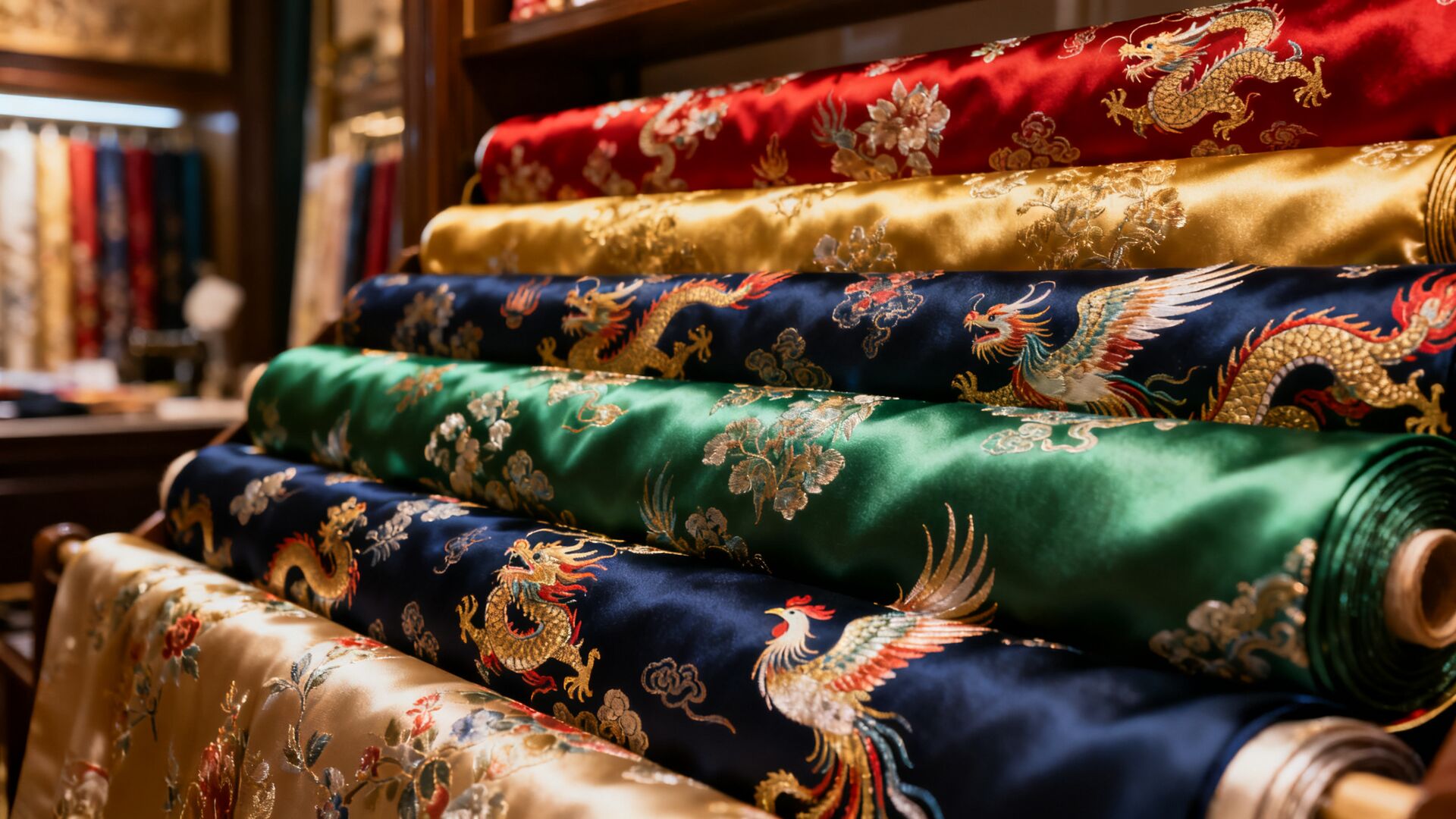
Rolls of Chinese silk fabric
By the Bolt

Silk Fabric

Sold by the meter or yard in every weave and weight imaginable. Hangzhou's silk markets and Suzhou's embroidery ateliers are legendary destinations for tailors, designers, and fabric collectors.

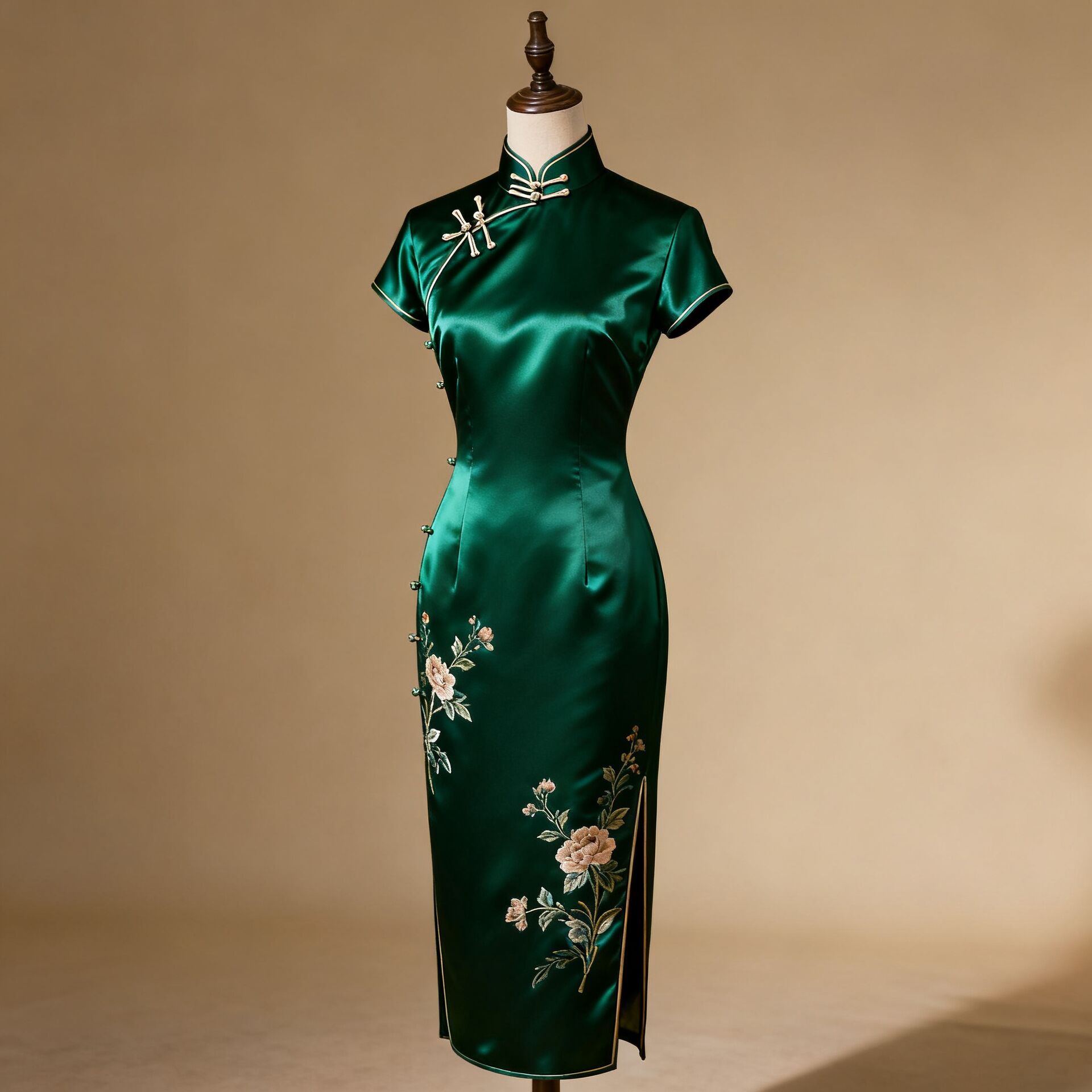
Qipao silk garment
Ready-to-Wear

Garments

Hanfu, qipao, blouses, dresses, loungewear — silk garments range from affordable everyday pieces to bespoke couture priced in the thousands. A well-made silk garment can last decades.

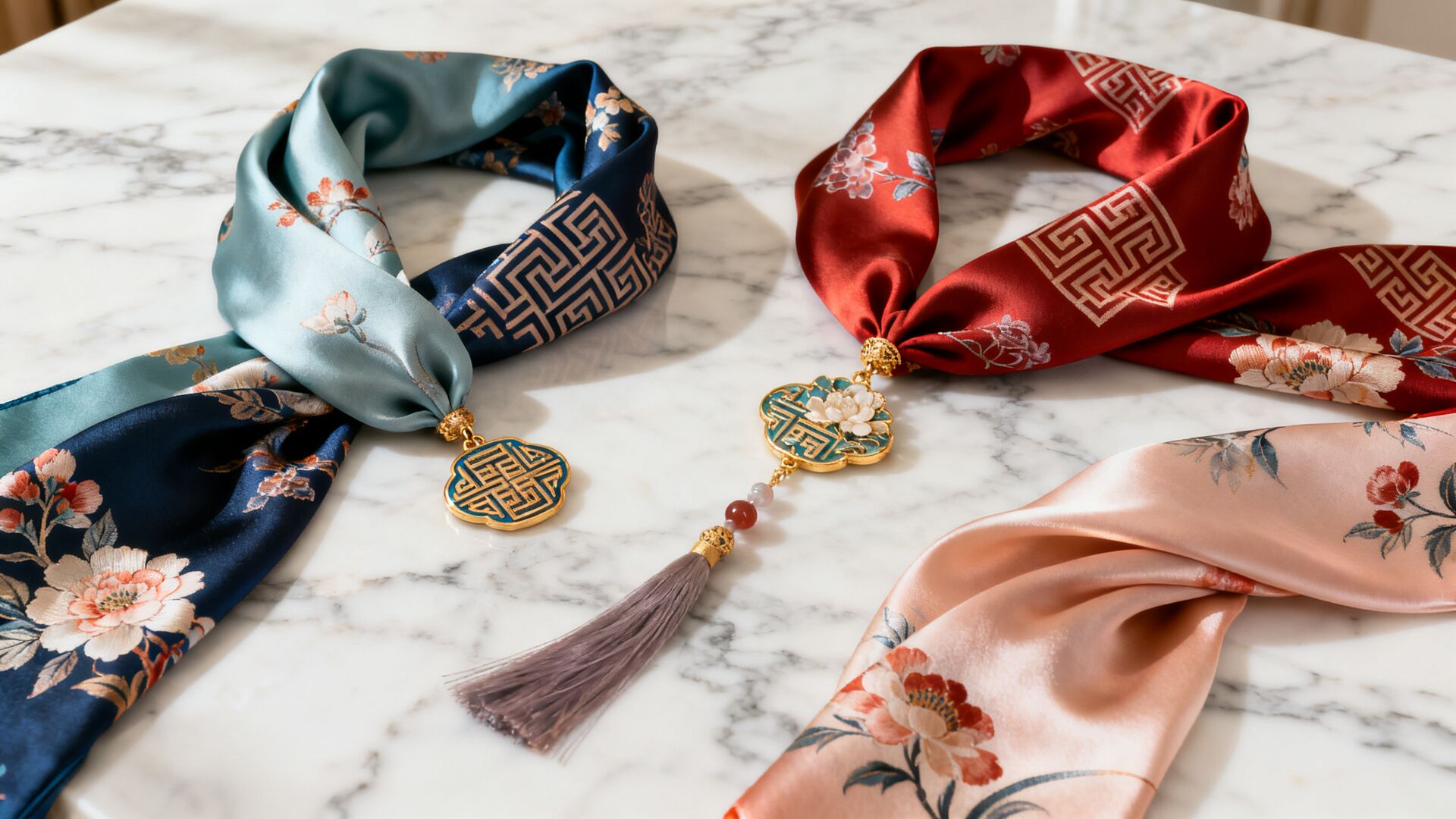
Silk scarves and accessories
Accessories

Scarves & Small Goods

Silk scarves, ties, pocket squares, hair accessories, and bags — an accessible entry point to the luxury of silk. Su embroidery scarves, in particular, are prized wearable art pieces.

Silk bedding
Home

Bedding & Home Textiles

Mulberry silk-filled duvets, silk pillowcases, and silk sheets are valued for temperature regulation, hypoallergenic properties, and the celebrated beauty benefit of smoother skin and hair.

Silk craft workshop
Art

Silk Art & Craft

Suzhou embroidery (苏绣), silk painting, tapestries, and Kesi (缂丝) — the "carved silk" tapestry technique so fine it was once reserved for imperial portraits. Many pieces take master artisans years to complete.

Sheer silk fabric
Beauty

Silk Beauty & Wellness

Silk eye masks, scrunchies, facial pillowcases, and even silk-infused skincare products draw on the protein-rich properties of sericin — the silk protein said to benefit skin and hair.

Care Guide

How to Care for Silk

Silk is remarkably durable — silk fibers are stronger than steel of the same diameter — but it needs gentle handling. Follow these rules to keep your silk pieces beautiful for decades.

Washing

  • Hand-wash in cool water with a mild, pH-neutral detergent — never use bleach or enzyme cleaners
  • Gently squeeze (don't wring) to remove water
  • Dry flat in shade — never hang in direct sunlight, which fades silk and weakens fibers
  • Machine wash only if the garment tag explicitly allows it — use a mesh bag and delicate cycle

Ironing & Steaming

  • Iron on the reverse side at the lowest heat setting (silk setting)
  • Never iron directly on embroidery or embellishments
  • Steaming is preferred — it refreshes silk without direct contact

Storage

  • Store in a cool, dry place away from direct light
  • Use breathable garment bags — never plastic, which traps moisture
  • Add cedar blocks to deter moths — but not in direct contact with the silk
Elegant silk care display

Cultural Connection

The Silk Road

For nearly two thousand years, silk was the soft power that stitched Eurasia together — a commodity, a currency, and a cultural ambassador all at once.

The Silk Road wasn't a single road but a network of caravan routes stretching from Chang'an (modern Xi'an) to the Mediterranean. Silk traveled west; glass, gold, horses, and new religions traveled east. The fabric itself became a global currency — Roman elites paid exorbitant prices for it, and silk brocade was used as diplomatic gift across the continent.

Today, the legacy of the Silk Road lives on in the global appreciation of Chinese textiles — and in the cross-cultural exchange that continues to reshape fashion in both East and West.